



Understanding Emerald Ash Borer
The Homeowners Guide To Emerald Ash Borer In MN
What is Emerald Ash Borer?
The Tiny Insect Causing BIG Problems
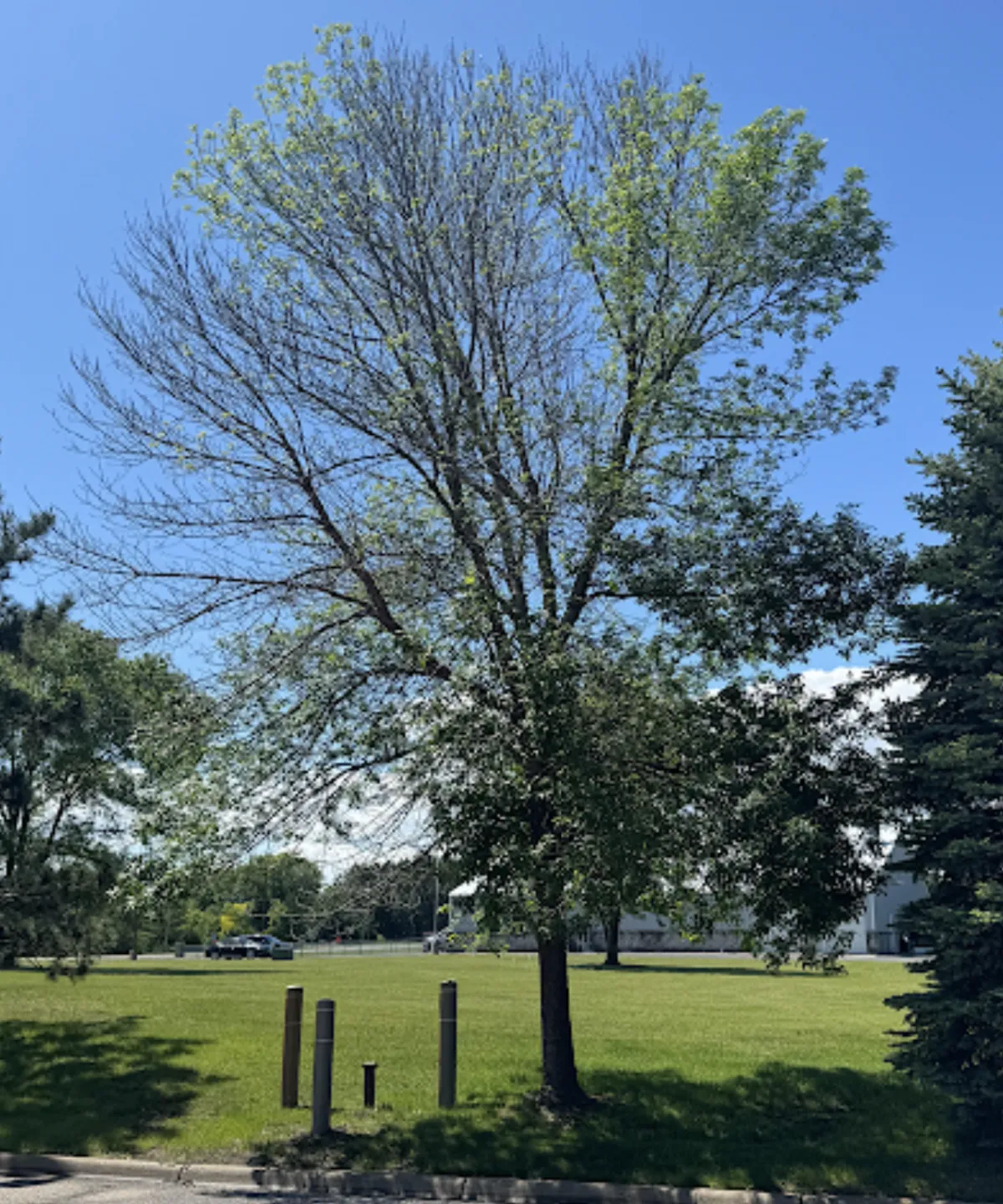
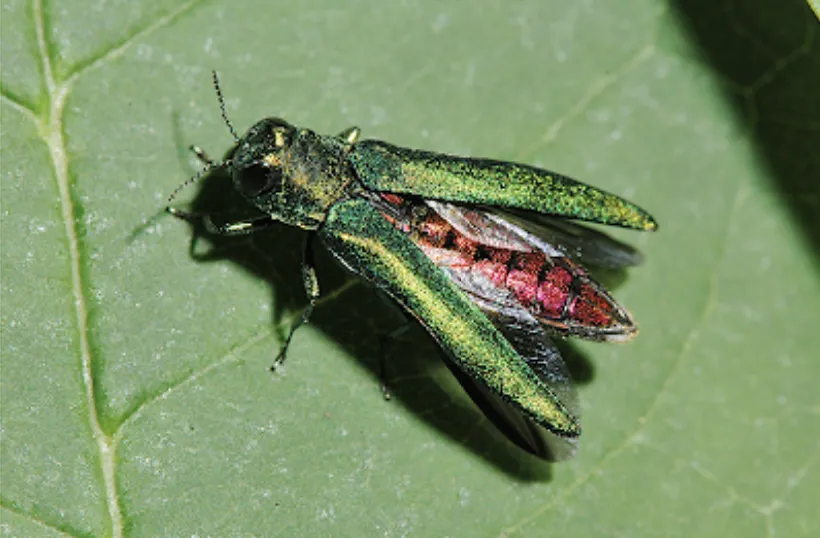
Emerald ash borer (EAB) is an invasive species that is extremely destructive to all species of ash trees in Minnesota. The EAB larvae destroys the vascular system of the tree, cutting off nutrient supply leading to death of the tree. Since ash trees don't have a natural defense system to protect itself against these attacks these trees will decline and die in a matter of a few years. Where beetle populations are high,
trees can die within just a single year of infestation. The beetle's rapid spread and extensive damage it causes have
made it one of the most destructive forest pests in North America. Early detection and effective management are critical in combating this invasive species and protecting ash populations.
Schedule Your Consultation
Protect Your Family, and Your Land, With a Free Risk Assessment
How To Protect Your Trees
Are Your Trees Safe? Here's Everything You need To Know
While EAB only attacks the ash species, that is good news for the other native trees here, but as for our ash tree population that is devastating news. Minnesota is home to three native ash species, black, green, and white ash, totals have been estimated to be one billion total ash trees, the most of any state in the United States. EAB does not attack any other tree species, and will not spread from an ash tree to an oak, maple, birch, etc. Preventive treatment can be done to save your ash trees, but typically by the time signs are noticed it is too late for treatment options.
Top Signs Of Emerald Ash Borer To Watch For
Tree crown dieback/thinning working downwards
D-shaped exit holes for adult emerald ash borer beetles
Woodpecker feeding looking for larvae - 'blonde bark'
S-shaped larvae galleries under the bark
Vertical bark splitting exposing the galleries
Premature leaf dropping falling early than usual
Epicormic shoots - 'suckers'
Cracked/weak or dead branches
Understanding The Circle Of Life For Your Trees
Adult female ash borer lay eggs in bark crevices or under bark flaps, the eggs will hatched in under two weeks.
Larvae burrow under the bark and feed on the cambium, creating the S-winding galleries disrupting the nutrient flow.
They will feed all winter beneath the bark a n d the next spring/early summer start to transformation into beetles.
Adult beetles emerge through D-shaped exit holes in the bark and are active for roughly 3-6 weeks. During this time
they will mate and females will lay eggs to restart the cycle.
Treatment & Prevention Against Emerald Ash Borer In Minnesota
As of now there are only two options available to fight against emerald ash borer:
- A yearly soil-applied systemic treatment
- A bi-yearly trunk injection systemic treatment
What You Can Do
- Contact Top Tier Tree! No seriously, getting a professional, certified tree inspector involved as early as possible is the best approach to long-term management of your property. Call us today or reach out to schedule a free risk assessment if you aren't sure.
Professional. Trusted. Top-Tier
Because Top-Tier People Deserve A Top-Tier Experience
Step 1: Assessment and Diagnosis
A certified evaluation of the tree's species, health, structural condition, and proximity to your home or power lines determines whether removal is actually necessary or whether pruning, cabling, or another form of management is right to solve your problem instead.
Step 2: Honest Recommendation
You get a clear explanation of what was found and why a specific plan, whether that is removal, pruning, or ongoing health management, is the right call for this tree. We walk through pricing, timelines and next steps so you know exactly what to expect and how to plan for protecting your home and your budget.
Step 3: Safety-First Execution
For open space trees, a straightforward fell. For anything near a structure, fence, or power line, our expert crew will climb and remove the tree in sections using proper rigging, always in full PPE.
Step 4: Clean-UP and Re-planting Guidance
Debris is chipped and hauled, stumps are addressed as their own step, and where a tree comes down, you get real guidance on replanting with species diversity in mind so one future pest or disease cannot wipe out the whole yard again.
Worried about a tree on your property? Let's Take A closer look
Rooted Right Here in Anoka County. Serving The Twin Cities Metro
Don't see your city listed? Don't worry, we probably serve your neighborhood as well. Reach out today to confirm.
Oak Grove MN
Andover MN
St. Francis MN
Ramsey MN
Ham Lake MN
Nowthen MN
Elk River MN
Anoka MN
Rogers MN
Dayton MN



Anoka County's Trusted Provider Of Professional Tree Services. Proudly Serving Oak Grove, MN and the surrounding North Metro.
Certified & Insured For All Tree Services In The State Of Minnesota
Copyright 2026. Top Tier Tree. All rights reserved.