



Building A Brighter Future For Oak Grove
Strategic Tree Planting In Anoka County MN
Rebuilding Anoka County's Canopy
What Comes Down Should Definitely Go Back UP
Tree planting is usually thought of as the easy, feel good part of tree care, but the decisions made at planting time are what determine whether a property's canopy is resilient or vulnerable twenty years from now. Minnesota has already lived through this lesson twice, first with Dutch elm disease wiping out huge numbers of elms planted as a single dominant street tree decades ago, and now with Emerald Ash Borer doing the same thing to neighborhoods that were heavily planted with ash. Both losses happened for the same underlying reason, entire areas relied on one species, so one pest or disease was able to take out the majority of the canopy at once. This breaks down species selection, diverse replanting specifically after a removal, structural care for young trees in their establishment years, and site and soil assessment to match the right tree to the right spot. Top Tier Tree treats planting as a genuine extension of the same diagnostic thinking applied to removal and pruning, not just picking whatever's available at a nursery and putting it in the ground. Mature tree canopy has a measurable effect on property value and on summer cooling costs, which means a thoughtful planting decision today is a long term investment, not just cleanup after a removal job.
Schedule Your Consultation
Protect Your Family, and Your Land, With a Free Risk Assessment
Your Guide To Replanting
Why It's So Important To Replant Trees After A Removal
Replanting after a removal is often treated as an afterthought, something to think about later once the stump is ground and the immediate problem is solved. That sequencing misses the actual opportunity, because the moment right after a removal is exactly when a property has the clearest chance to correct whatever made the original tree vulnerable in the first place. If a lost ash tree was one of several ash trees on a block, planting another ash in its place simply recreates the same single species vulnerability that made Emerald Ash Borer so devastating in Minnesota to begin with. The same logic applies at a smaller scale to soil and site conditions, a tree planted without real consideration for sun exposure, soil drainage, or available root space is set up to struggle from year one, regardless of species. Structural care in a young tree's first several years also matters more than most homeowners expect, since correcting a poor branch angle or competing leader early is simple, while the same issue left uncorrected becomes a much larger structural problem a decade later. None of this requires an unusual level of effort, but it does require actually thinking through the decision rather than defaulting to whatever's convenient or whatever was there before.
Why Tree Planting Matters So Much In Anoka County
Minnesota has already lost huge sections of urban canopy to single species vulnerability, twice: Dutch elm disease and Emerald Ash Borer both devastated neighborhoods that had been heavily planted with one dominant species decades earlier, and diverse replanting is the direct way to avoid repeating that pattern a third time.
Diverse species selection protects the next generation of canopy from a single future pest or disease: Spreading species diversity across a property, or even across a neighborhood, means no single pest event can wipe out the majority of the trees at once the way EAB did with ash.
Mature tree canopy has a measurable, long term effect on property value and summer cooling costs: Replanting thoughtfully after a removal is a genuine investment in the property's future value and comfort, not simply a cosmetic fix for the empty space a removal leaves behind.
When You Should Consider Replanting Your Trees
Spring and early fall are the strongest planting windows in Minnesota's climate: Both seasons give a new tree's root system time to establish before the stress of summer heat or a hard winter freeze sets in, significantly improving the odds of successful establishment.
Replanting after a removal should happen before the site gets used for anything else: Waiting too long risks the space getting repurposed, compacted, or complicated by new landscaping decisions that make planting a tree there later more difficult than it needed to be.
Professional. Trusted. Top-Tier
Because Top-Tier People Deserve A Top-Tier Experience
Step 1: Assessment and Diagnosis
A certified evaluation of the tree's species, health, structural condition, and proximity to your home or power lines determines whether removal is actually necessary or whether pruning, cabling, or another form of management is right to solve your problem instead.
Step 2: Honest Recommendation
You get a clear explanation of what was found and why a specific plan, whether that is removal, pruning, or ongoing health management, is the right call for this tree. We walk through pricing, timelines and next steps so you know exactly what to expect and how to plan for protecting your home and your budget.
Step 3: Safety-First Execution
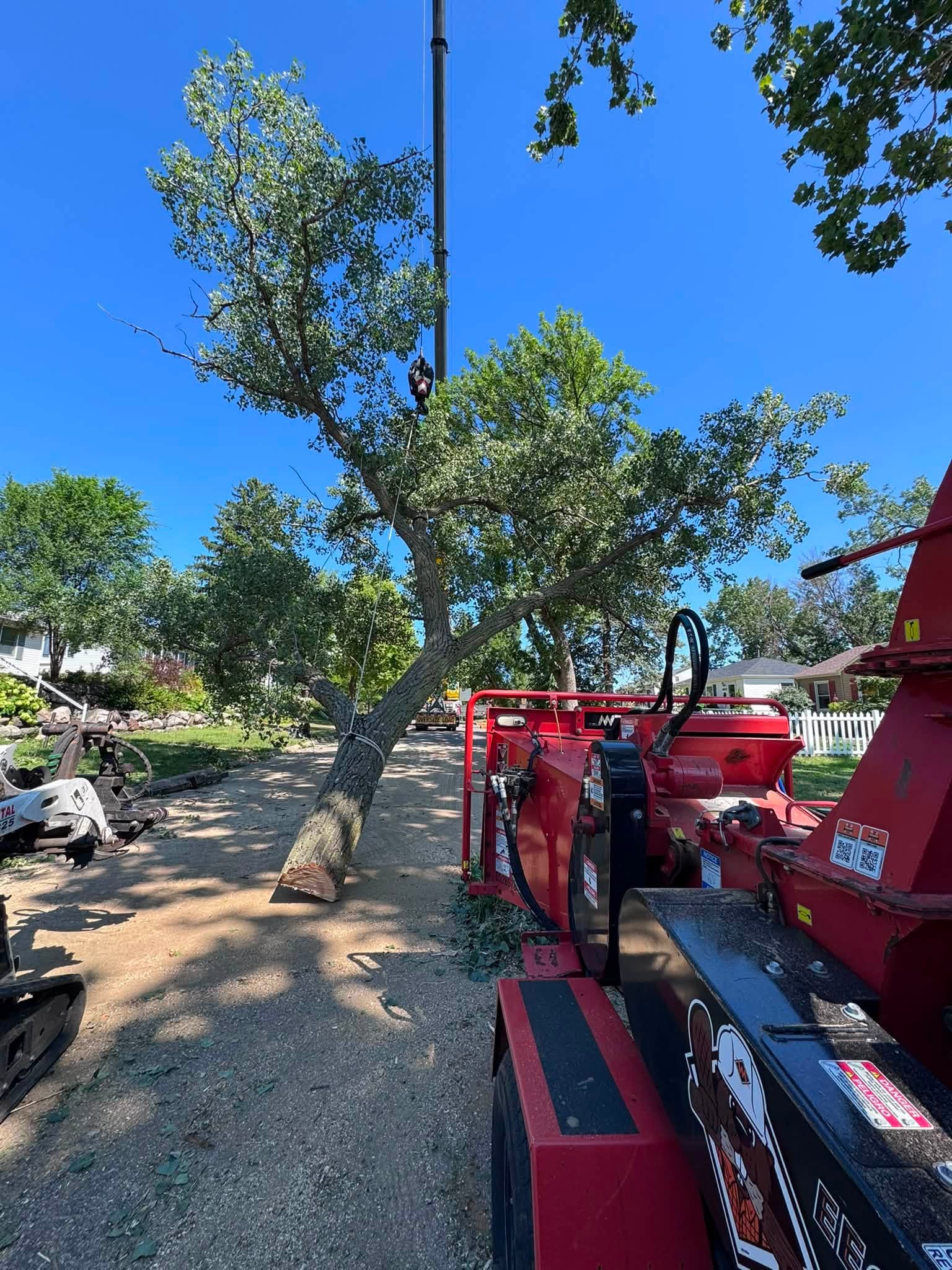
For open space trees, a straightforward fell. For anything near a structure, fence, or power line, our expert crew will climb and remove the tree in sections using proper rigging, always in full PPE.
Step 4: Clean-UP and Re-planting Guidance
Debris is chipped and hauled, stumps are addressed as their own step, and where a tree comes down, you get real guidance on replanting with species diversity in mind so one future pest or disease cannot wipe out the whole yard again.
We Speak Your Language
Transparent Land Management You Actually Understand
Blake started Top Tier Tree because he was tired of watching neighbors get talked into removals they didn't need. A tree that's been on a property for forty years doesn't deserve a five minute look and a quote written on the back of a business card. When you call Top Tier every job starts the same way it did on day one, we walk the property, take a real look at what's going on with your property , and provide a straight, no-BS answer about what needs to happen next, always prioritizing management over removal. No upsell, no scare tactic about your roof. Just someone who actually knows trees, telling you the truth about yours.
FAqs
Common questions Your Neighbors Are asking
What should I plant After Removing an Ash Tree?
A different species than what was lost is usually the right call, specifically to avoid rebuilding a canopy that could be wiped out again by a single future pest or disease the way Emerald Ash Borer did with ash across Minnesota.
When is the best time to replant my Trees?
Spring after the ground thaws and early fall before the first hard frost are both strong windows, since each gives a new tree's roots time to establish before the stress of summer heat or winter cold sets in.
Worried about a tree on your property? Let's Take A closer look
Rooted Right Here in Anoka County. Serving The Twin Cities Metro
Don't see your city listed? Don't worry, we probably serve your neighborhood as well. Reach out today to confirm.
Oak Grove MN
Andover MN
St. Francis MN
Ramsey MN
Ham Lake MN
Nowthen MN
Elk River MN
Anoka MN
Rogers MN
Dayton MN



Anoka County's Trusted Provider Of Professional Tree Services. Proudly Serving Oak Grove, MN and the surrounding North Metro.
Certified & Insured For All Tree Services In The State Of Minnesota
Copyright 2026. Top Tier Tree. All rights reserved.