



Fast Response, Same High Standards
Emergency Tree Services In Anoka County MN
Always Urgent, Never hurried
Emergency Tree Response You Can Count On When You Need Us Most
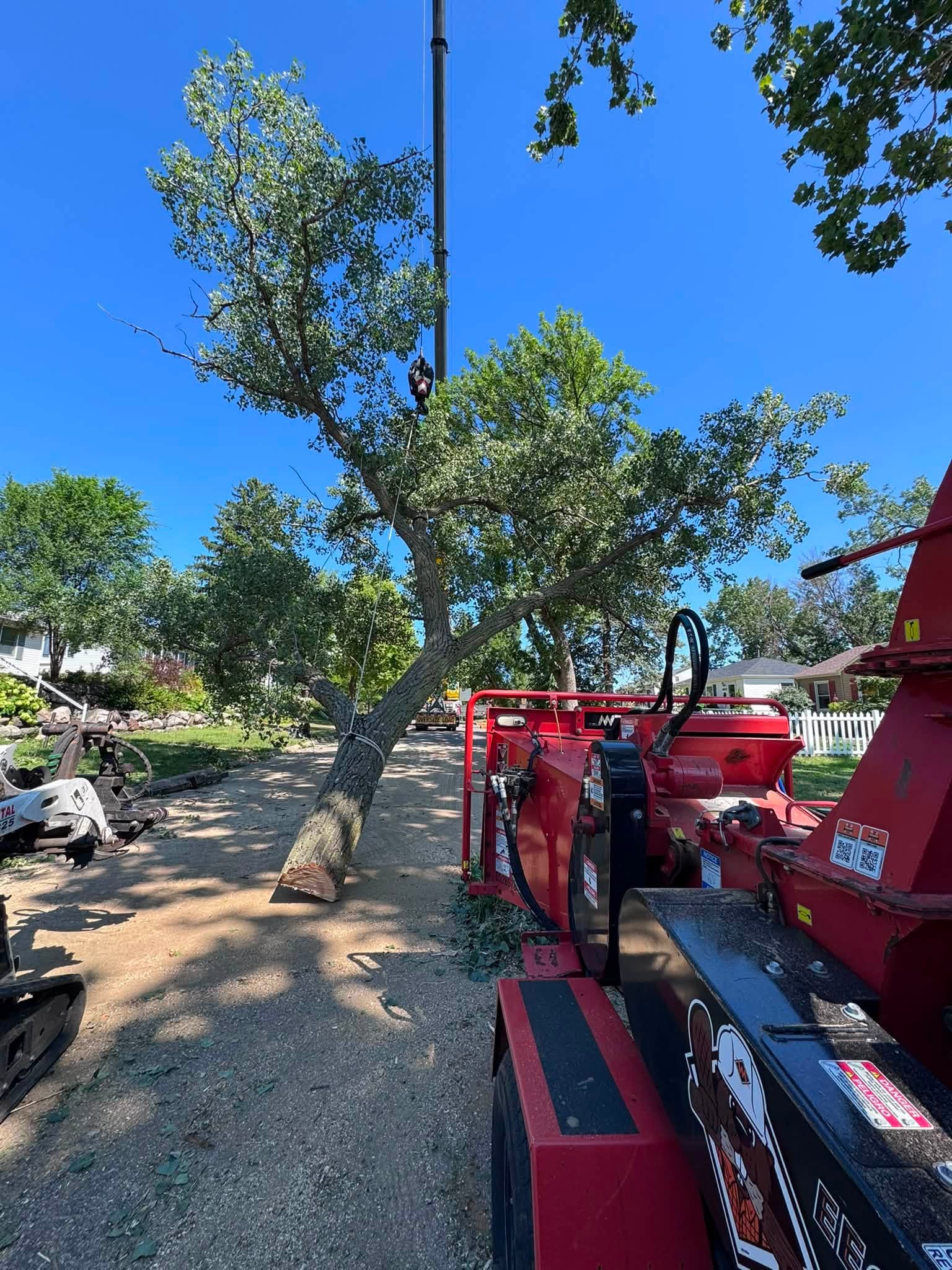
Tree emergencies bring out the worst version of this industry faster than almost anything else, because a homeowner staring at a tree on their roof or blocking their driveway is not in a position to shop around or ask detailed questions about credentials. That urgency is precisely what out of state storm chasing crews rely on after a major Minnesota storm event, showing up quickly, doing rushed and often unsafe work, taking payment, and disappearing before problems with the job surface later. From the storm damage response, fallen tree removal, hazard tree emergency response, and insurance documentation support for homeowners navigating a claim, Top Tier Tree treats an emergency call with the same underlying standard applied to every scheduled job. A fallen or hanging tree involving a structure, a vehicle, or a power line is an active, worsening risk, not a problem that improves by waiting, which is why response time matters as much as the quality of the work itself. Storm season in Minnesota brings a predictable, recurring pattern of spruce and pine damage from wind and heavy snow load, and that seasonal reality is part of why having an established, insured, certified local crew matters more than finding whoever can show up first.
Schedule Your Consultation
Protect Your Family, and Your Land, With a Free Risk Assessment
Preventative Maintenance Comes First
How To Be Prepared For Potential Storm Damage To Your Trees
When crisis hits, the urgency is real. A tree resting on a roofline or tangled in power lines is not a problem that gets safer by waiting, but urgency and recklessness aren't the same thing, and a properly trained crew can move quickly without skipping the safety standards that matter most in exactly these higher risk situations. Insurance is a separate, often underappreciated piece of this, since a homeowner dealing with storm damage typically also needs documentation to support a claim, and a rushed, undocumented removal can leave that homeowner without the evidence they need weeks later when the claim is actually processed. Minnesota's storm season creates a predictable enough pattern, wind and heavy snow load damaging spruce and pine in particular, that having an established local option in place before an emergency happens is worth more than scrambling to find someone during the event itself.
How To Respond In The Event Of A Storm Or Emergency
A fallen or hanging tree on a structure, vehicle, or power line is an active safety risk that gets worse the longer it sits: Weight shifts, additional weather exposure, and continued stress on already compromised wood all increase the danger the tree poses the longer it remains unaddressed.
Storm chasing operators are a real and common problem after major Minnesota storm events: Out of state crews frequently show up after significant storms, perform rushed or unsafe work, collect payment, and leave before any problems with the job become apparent to the homeowner.
Proper documentation at the time of the emergency matters significantly for insurance claims that follow: Photos and a written assessment completed at the time of the incident give a homeowner the evidence needed to support a claim, which is much harder to reconstruct after the fact.
The Most Common Reasons Requiring Removal
Immediately after any tree failure involving a structure, vehicle, or power line: These situations represent active, ongoing risk rather than a problem that can reasonably wait for a standard scheduling window.
During and after Minnesota's storm season: Wind and heavy snow load damage to spruce and pine is a recurring, predictable driver of emergency calls. Having an established, trusted option in place ahead of storm season is more reliable than searching for one during an active emergency.
Professional. Trusted. Top-Tier
Because Top-Tier People Deserve A Top-Tier Experience
Step 1: Assessment and Diagnosis
A certified evaluation of the tree's species, health, structural condition, and proximity to your home or power lines determines whether removal is actually necessary or whether pruning, cabling, or another form of management is right to solve your problem instead.
Step 2: Honest Recommendation
You get a clear explanation of what was found and why a specific plan, whether that is removal, pruning, or ongoing health management, is the right call for this tree. We walk through pricing, timelines and next steps so you know exactly what to expect and how to plan for protecting your home and your budget.
Step 3: Safety-First Execution
For open space trees, a straightforward fell. For anything near a structure, fence, or power line, our expert crew will climb and remove the tree in sections using proper rigging, always in full PPE.
Step 4: Clean-UP and Re-planting Guidance
Debris is chipped and hauled, stumps are addressed as their own step, and where a tree comes down, you get real guidance on replanting with species diversity in mind so one future pest or disease cannot wipe out the whole yard again.
We Speak Your Language
Transparent Land Management You Actually Understand
Blake started Top Tier Tree because he was tired of watching neighbors get talked into removals they didn't need. A tree that's been on a property for forty years doesn't deserve a five minute look and a quote written on the back of a business card. When you call Top Tier every job starts the same way it did on day one, we walk the property, take a real look at what's going on with your property , and provide a straight, no-BS answer about what needs to happen next, always prioritizing management over removal. No upsell, no scare tactic about your roof. Just someone who actually knows trees, telling you the truth about yours.
FAqs
Common questions Your Neighbors Are asking
What Should I do If A Tree Falls On My House?
Contact your insurance company and a licensed, insured tree service as soon as possible, and avoid attempting removal yourself, particularly if the tree is in contact with power lines or appears structurally unstable.
How To Find An Emergency contractor I can Trust?
Ask for proof of insurance and relevant certification before agreeing to any work, since storm chasing crews commonly lack both and are counting on the urgency of the situation to prevent that question from being asked.
Worried about a tree on your property? Let's Take A closer look
Rooted Right Here in Anoka County. Serving The Twin Cities Metro
Don't see your city listed? Don't worry, we probably serve your neighborhood as well. Reach out today to confirm.
Oak Grove MN
Andover MN
St. Francis MN
Ramsey MN
Ham Lake MN
Nowthen MN
Elk River MN
Anoka MN
Rogers MN
Dayton MN



Anoka County's Trusted Provider Of Professional Tree Services. Proudly Serving Oak Grove, MN and the surrounding North Metro.
Certified & Insured For All Tree Services In The State Of Minnesota
Copyright 2026. Top Tier Tree. All rights reserved.